
At the Same Time
A friendship in translation
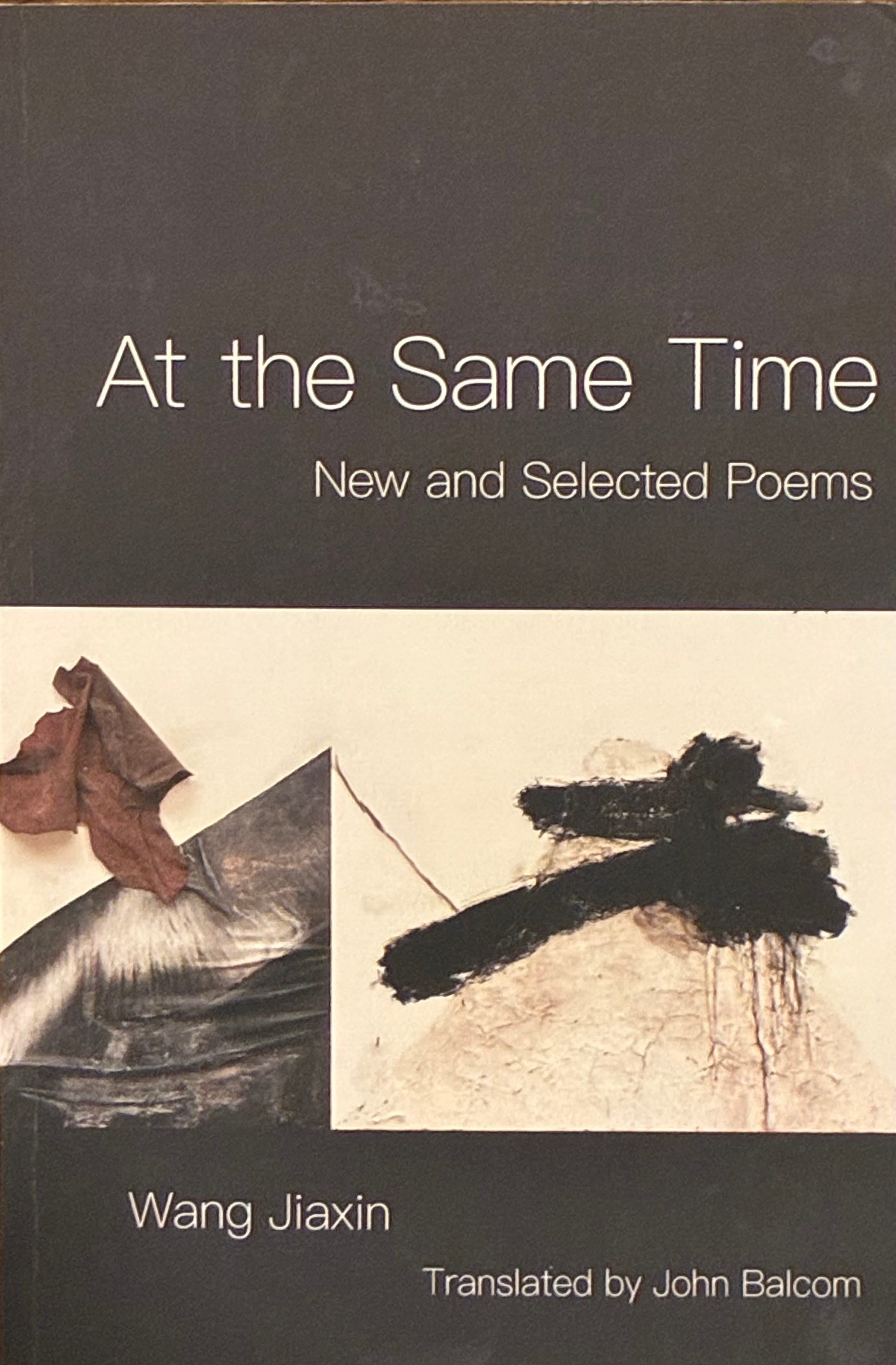
Arrowsmith Press, 2025
In 2005 I moved to China to teach Comp and Lit at Beijing Normal University. I knew very little Mandarin, but I was desperate to learn it and understand anything I could about the Chinese poetry scene(s). I went to any poetry event that I could find and listened dutifully to poetry a language I could not yet understand. Occasionally I’d shove down my self-respect and randomly introduce myself to one of the poets at these events, feeling both shameful and emboldened by the fact that I would be forgotten the moment I walked out the door.
Or not. One night, I was walking home to my apartment in the Foreign Expert Housing building, when I received a call from a stranger I’d once introduced myself to telling me that I should go right now and buy a plane ticket to Nanjing for the next day to come to a poetry festival because a man named Armando had just dropped out. I would be reimbursed.
The New Yorker in me said, “No way,” but the me in China said, “Why not!” so I walked to one of the kiosks in the neighborhood where one bought plane tickets at that time, got some, and then went home, packed, and read everything in my guidebook about Nanjing.
Turns out, I wasn’t going to Nanjing. I was going to the airport in Nanjing, and then I was going to be picked up by a car full of poets going to a city called Ma’anshan to experience the First China Poetry Festival. At this point, I had been taking about three hours of Chinese classes a day for months and understood a little more of what people said, but this only made me see the largeness of what I didn’t understand. (This I believe is the bell curve of learning a language: at first it seems impossible that you’ll ever understand anything, then you understand things and it’s euphoric, and then you see more clearly the abyss of all you don’t understand and it seems impossible that you’ll ever understand anything. I was nearly at the abyss.)
I didn’t understand the nuances of the speeches at banquets. I didn’t understand why there were so many banquets. I didn’t understand why there were more talks than poetry readings. And more: I wondered what was the deal with this poetry festival that had its own logo and had taken over the entire city? There were billboards hiding construction sites, and these billboards showcased the future of this town as a poetry city that still lives in my imagination. More questions: Why was I there—or what did I represent by being there? What was I implicit in? What was the intersection of state politics and poetry at this particular festival?
Some of these questions were thoughtfully addressed by John Crespi, a scholar I met at the festival, in this essay here.
The festival also raised the question I’m always asking as an editor of translations—how to carry the depth of context across cultures and into a new land?
The entire time I was at the conference, I was referred to as Armando.
I’ll risk sounding dramatic: that weekend trip changed the course of my life in many ways, less through moments of understanding, and more because not understanding led me in directions I’m still traveling and to people I still care about. One person I met there was the poet Wang Jia Xin.
Wang Jia Xin immediately took me under his wing while also gently ribbing the way that I was utterly lost and yet had the confidence of a young person who had not yet accomplished much. When we went to visit places Li Bai had been to, he was moved and that moved me. I’m still moved.
He was a translator, too, of Paul Celan into Chinese, a favorite of mine, and a poet from the same town as my grandfather. From town to town, language to language, we talked, and stayed in touch through the decades, most recently when he came to my house in the US for dinner a few weeks ago.
In preparation for his visit, I reread his new book of poetry translated into English, At the Same Time, translated by John Balcom and this experience, to hear a friend’s voice and lyric in my language, is, for me, a wonderfully layered experience of translation, highlighting the way translation is always layering us closer. Wang Jia Xin and I have spoken across decades and across languages. But his poems do more than speak—they open up a world of a mind. They allow me to hear, in my head, how Wang Jia Xin thinks through contexts and draws people far and wide closer together.
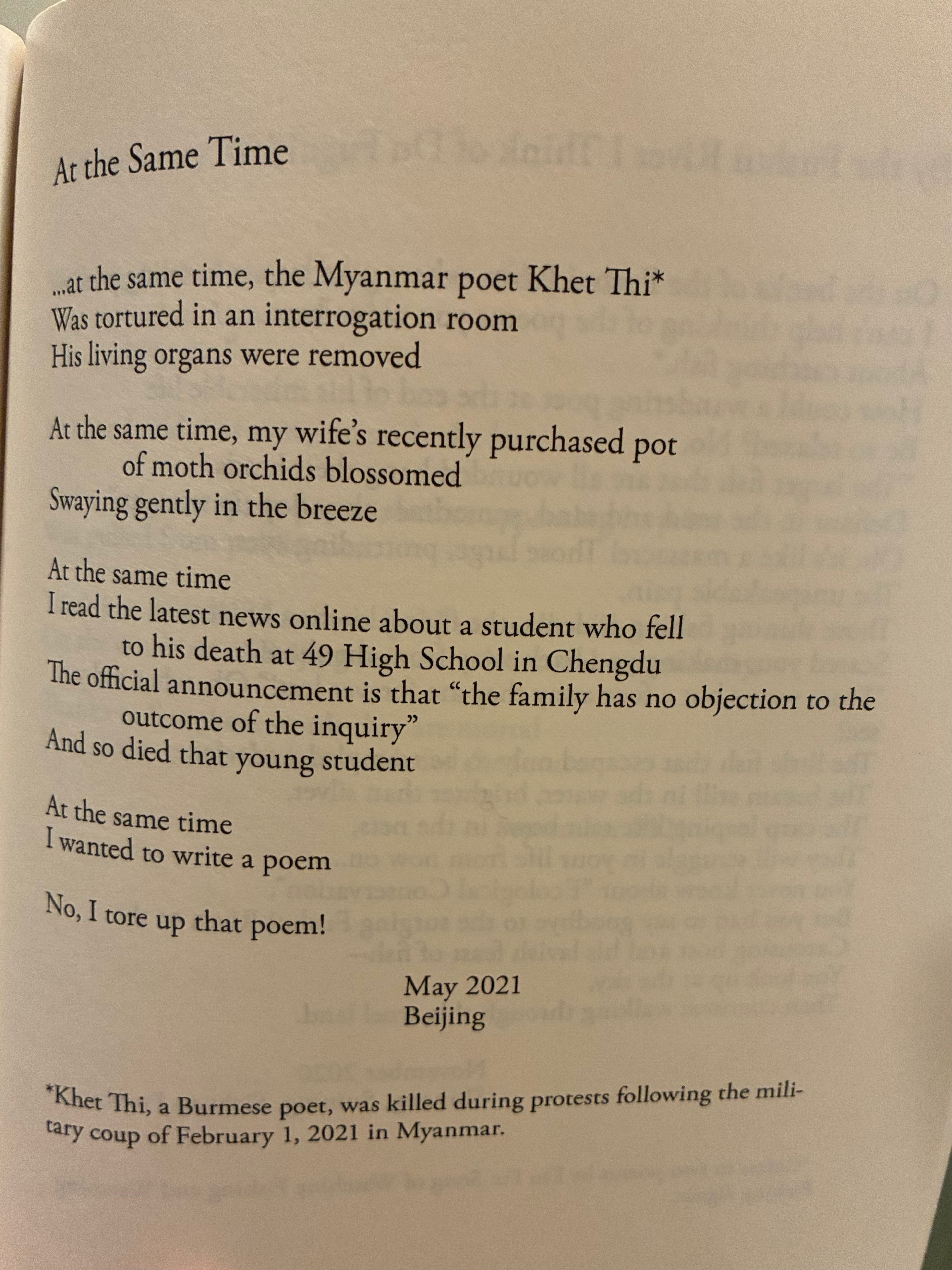
At my house, Wang Jia Xin did me the favor of reading a poem from his new, wonderful collection out loud. Here he is reading:
This is the poem:
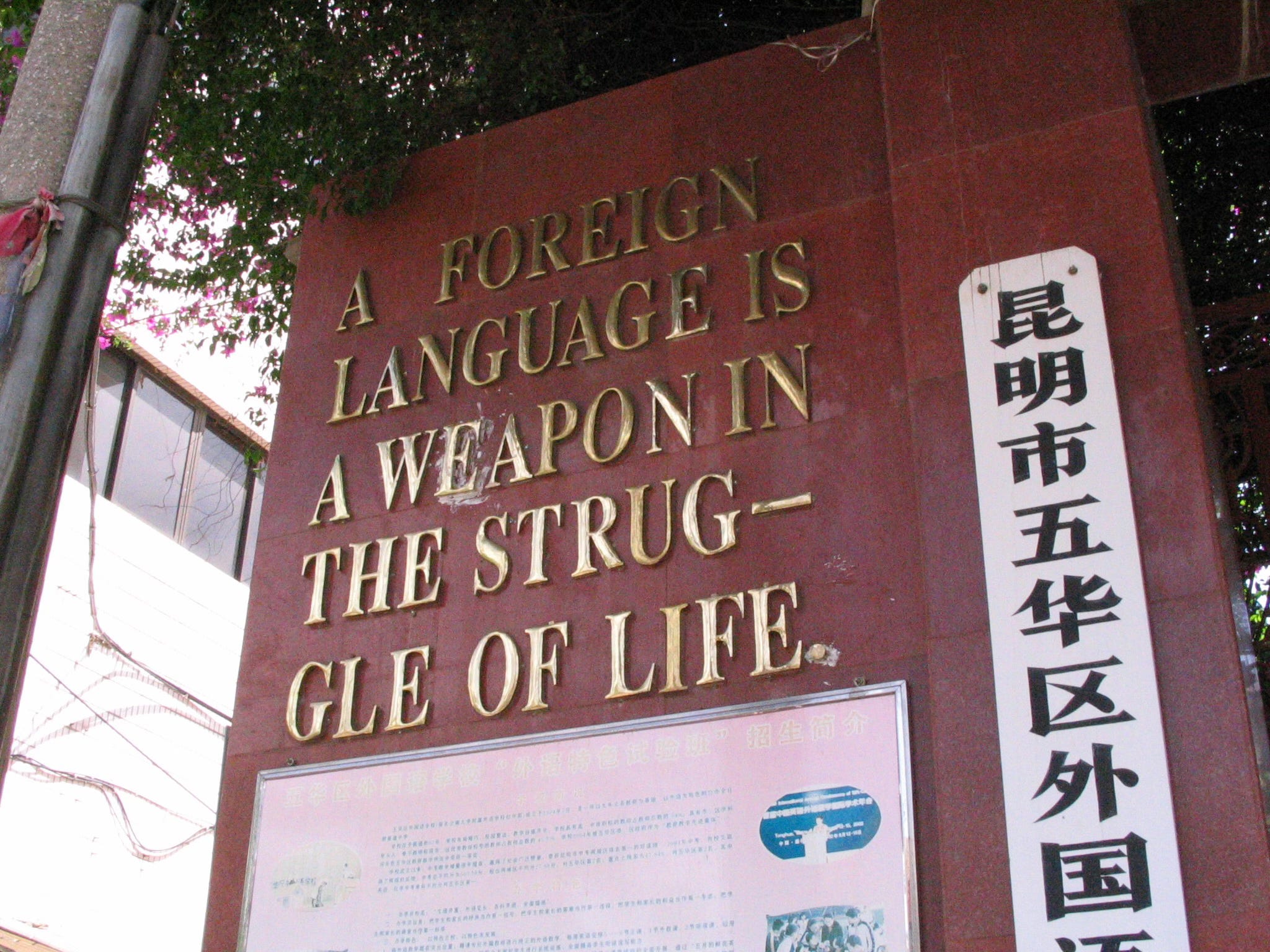
And here’s a photo of a Marx quote I took in China in 2006:
—Jennifer Kronovet
I’m a poet and translator in the thick of learning Polish…. I learned Spanish to fluency in my youth, and have wrangled briefly with a number of other languages. Polish may be the only other language I stick with for the long haul, and this strikes me as so true : “This I believe is the bell curve of learning a language: at first it seems impossible that you’ll ever understand anything, then you understand things and it’s euphoric, and then you see more clearly the abyss of all you don’t understand and it seems impossible that you’ll ever understand anything.”
Also, I how amazing to be an “Armando” at such a festival. A dream!!!